






Official government website of the Government of the Kingdom of Saudi Arabia
How to verify
Links to official Saudi websites end withedu.sa

All links to official websites of government agencies in the Kingdom of Saudi Arabia end withsch.sa أو edu.sa

Government websites use the HTTPS protocol for encryption and security.

Secure websites in the Kingdom of Saudi Arabia use the HTTPS protocol for encryption.

Previous version of the website
Academic Calendar
Jeddah
Sunny
C 37.1
C 30.7
Khlis
Sunny
C 39.2
C 29.1
Al Kamil
Sunny
C 37.8
C 29.5
Beta Launch

College of Computing and Information Technology at Al-Kamil

Established in 1432 AH, the College of Computing and Information Technology at Alkamil prepares qualified national professionals through a stimulating learning environment and high-quality programs that foster innovation, meet labor market needs, and serve the community.

109
Total Number of Students
17
Number of Faculty Members
8
Number of Administrative Staff

    Academic Programs

    Bachelor’s Degree
    Bachelor of Science in Information Technology
    About the Programs
    Conditions for admission to the program
    Professional certificates
    Course description
    Employment ratio
    Study Plan
    Program performance indicators

    The College of Computing and Information Technology in AlKamil is participating in the Alumni Forum 2026

    May 2026

    The 95th Saudi National Day Celebration – University of Jeddah, Al Kamil Branch

    Sep 2025

    College Students Participate in the “Tahseen Marathon” at the University of Jeddah

    Sep 2025

    AI-Powered Theatrical Performance

    Apr 2026

    Short film and discussion session

    Apr 2026

    Our College Celebrates Founding Day

    Feb 2026

    Voluntary Initiative for Teachers of Al-Kamil

    May 2026

    Leadership Skills Workshop

    Apr 2026

    Training session "Power BI"

    Nov 2025

    Media Center

    Research and Innovation

    All Researchs
    Examining the factor’s influencing IoT-blockchain based secure transmission services

    29 Sep 2025

    This study proposes a blockchain-based framework to enhance data security in Internet of Things (IoT) systems. It integrates several node types—Transmission, Inspection, and Forwarding Nodes, plus a Blockchain Security Service—to protect sensor data end-to-end. Using both conceptual modeling and expert evaluation from 32 specialists, the results show strong security and reliability for blockchain components, though Inspection Nodes need improvement. Overall, the model strengthens trust, integrity, and performance in decentralized IoT environments.

    In-depth exploration of software defects and self-admitted technical debt through cutting-edge deep learning techniques

    11 Jun 2025

    This study introduces an innovative deep learning–based approach to detect and classify Self-Admitted Technical Debt (SATD) along with related software defects. The model was trained using data from open-source projects such as Apache, Mozilla Firefox, and Eclipse, applying several architectures including LSTM, GRU, BERT, and GPT-3. Results show that the GPT-3 model achieved the highest accuracy (0.984), outperforming other models. The research contributes to improving software quality by enhancing the detection and understanding of technical debt and software defects, thereby supporting sustainable software maintenance and development.
    Dynamic Neighborhood Selection for Context Aware Temporal Evolution Using Graph Neural Networks

    05 Dec 2024

    Graph neural networks (GNN) have seen significant growth recently for modeling temporal evolution in dynamic networks. Representation of complex networks in the form of graph data structures has enabled researchers to study how entities within these networks interact with each other. These interactions evolve over time. Developing a generic methodology for modeling this temporal evolution in complex networks for tracking evolving relationships has been a significant challenge. Most of the existing methods fail to extract contextual representations of historical neighborhood interactions for future link prediction. To address these challenges, this paper presents a novel method for modeling temporal evolution in complex networks using GNNs. A Context-Aware Graph Temporal Neural Network (CATGNN) method that uses dynamic neighborhood selection based on common neighbors for a given node is presented. The method uses dynamic neighborhood selection using contextual embeddings extracted from the historical interactions of the down-sampled set of neighbors of a central node based on a common neighborhood. Fixed-sized contextual memory modules are constructed for each node that store the historical interactions of its neighbors and are updated based on the recency and significance of interactions. The proposed method has been evaluated using six real-world datasets and has comparable performance against state-of-the-art methods, both in terms of accuracy and efficiency. It shows an improvement of 7.52 to 0.05% over the baselines in terms of average precision. The results demonstrate that the proposed CATGNN model can capture complex patterns of change that are difficult to identify using traditional techniques by propagating information over the graph structure. The model can be applied in various fields involving complex systems.
    Examining the factor’s influencing IoT-blockchain based secure transmission services

    29 Sep 2025

    In-depth exploration of software defects and self-admitted technical debt through cutting-edge deep learning techniques

    11 Jun 2025

    Dynamic Neighborhood Selection for Context Aware Temporal Evolution Using Graph Neural Networks

    05 Dec 2024

    All Researchs

    We Are Proud Of

    🎉 Congratulations The College of Computing and Information Technology congratulates Abdulqader Al-Sagaf, a graduate of the Information Technology program, on achieving third place in the Basic and Engineering Sciences Track at the First Research Conference of Makkah Region Universities for his project titled: “Unified Cyber Defense Platform: An Integrated Solution for Phishing Detection and Security Compliance.” We are proud of this outstanding achievement and wish him continued success and excellence.
    CCIT Graduate Achieves Third Place at the First Research Conference of Makkah Region Universities
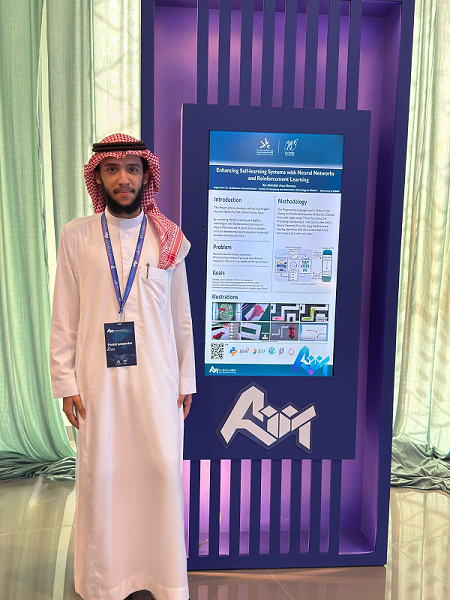
    The student Abdullah Anas Bamousa participated with a scientific poster in the International Conference on Innovation in Artificial Intelligence and the Internet of Things, presenting the use of Deep Reinforcement Learning techniques to enhance the performance of self-learning systems.
    We are proud of our talented student, Abdullah ِAnas Bamousa.
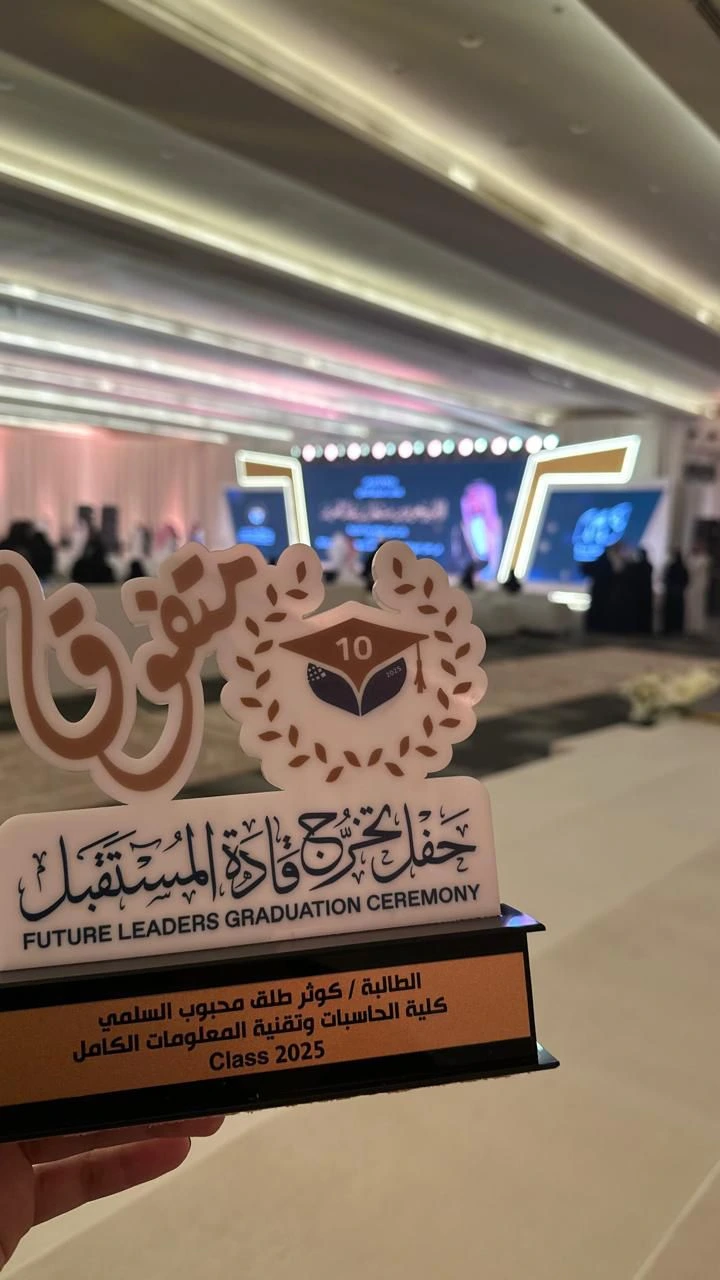
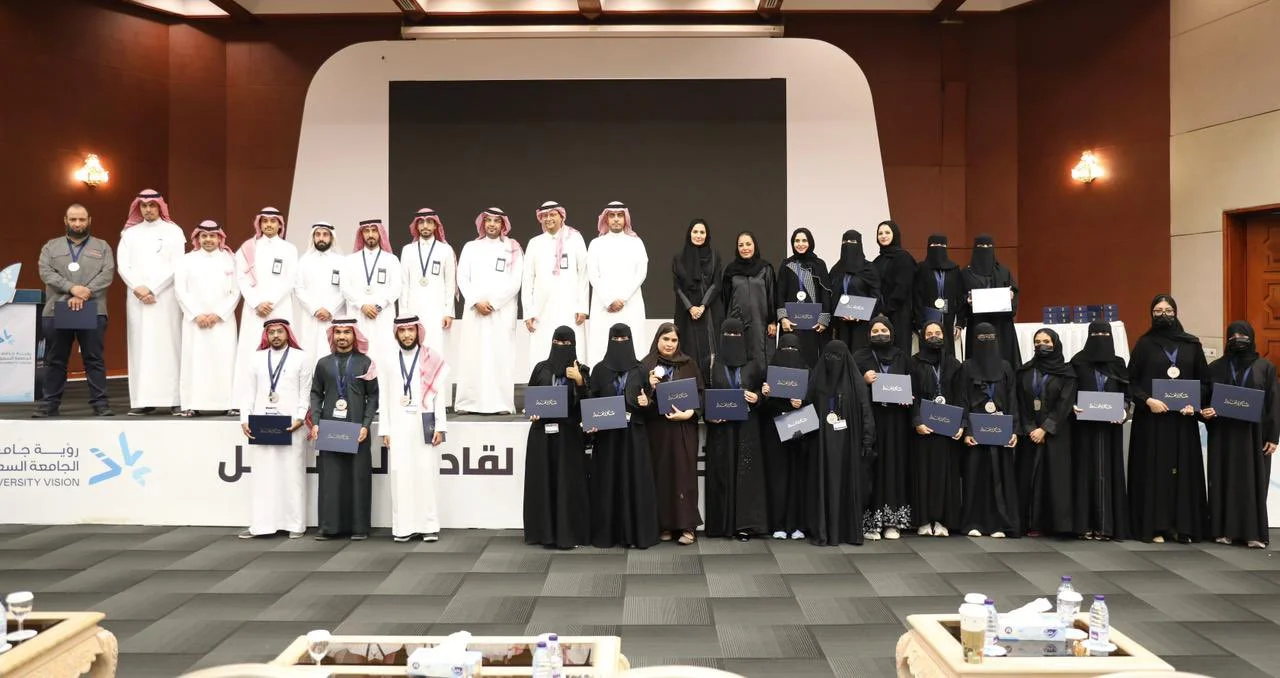
    The College of Computing and Information Technology proudly congratulates its outstanding graduating student, Kawthar Talaq Al-Sulami, on being honored as one of the top-performing students in her graduating cohort. We are proud of her remarkable achievement and wish her continued success and excellence.
    Outstanding Graduate Kawthar Al-Sulami Honored Among Top Achievers